Philosophy · A free classic

The Enchiridion in plain English

A former slave's rules for what you can and can't control

Free in Clarify · The full book, with help where it’s hard

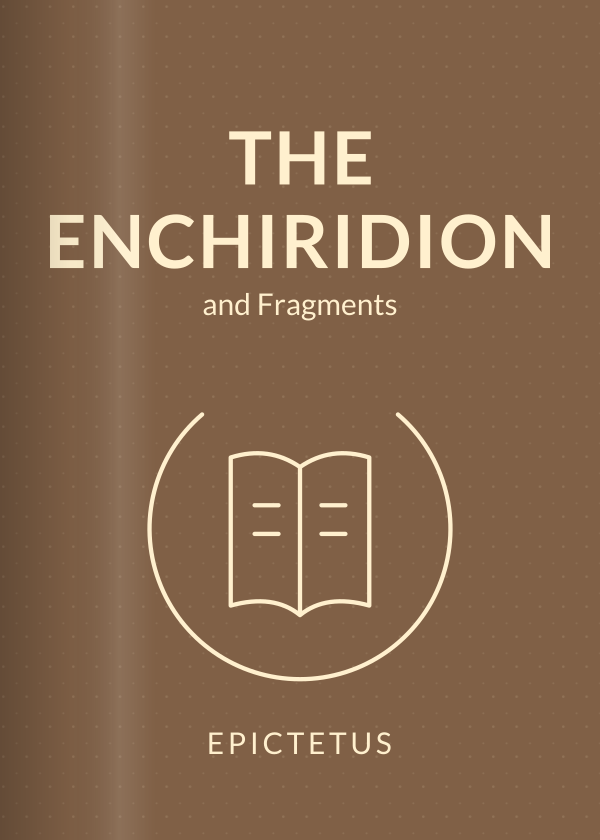
The Enchiridion coverThe real book. A clearer way through it.

A page from the book

Read it in plain English.

The same passage, with the language made clearer. Read the full book this way in Clarify.

Original

Section 1Translated by George Long

Of things some are in our power, and others are not. In our power are opinion, movement towards a thing, desire, aversion; and in a word, whatever are our own acts: not in our power are the body, property, reputation, offices (magisterial power), and in a word, whatever are not our own acts. And the things in our power are by nature free, not subject to restraint nor hindrance: but the things not in our power are weak, slavish, subject to restraint, in the power of others.
In Clarify

Clarify’s plain-English version · Generated by AI

Some things are in our power, and some are not. In our power are our opinions, our movements toward a thing, our desires, and our aversions (the things we turn away from). In a word, we control whatever is our own act. Not in our power are our bodies, our property, our reputation, and our offices (positions of public authority). In a word, whatever is not our own act is outside our control. The things in our power are free by nature. No one can restrain or hinder them. But the things not in our power are weak and slavish. They can be restrained, and they belong to the power of others.

The book behind the language

About the book

The Enchiridion is a short handbook drawn from the teachings of Epictetus, a Stoic philosopher who lived under the Roman Empire. His student Arrian compiled it in the second century AD. Its opening distinction separates our own judgments and choices from things that do not lie wholly within our power, such as reputation and possessions.

The chapters apply that distinction to loss, ambition, relationships and daily frustrations. Their aim is to train a person's responses, not merely to offer comforting sayings. The handbook became an enduring introduction to Stoic practice. Its brevity makes it easy to return to, while reading the whole work shows how its advice connects personal discipline with duties toward other people.

Help where it’s hard

How Clarify helps

Stay with The Enchiridion. Get help with the words and ideas as you read.

Simplify as you read.

Turn on Simplify for clearer prose throughout the book. Or select one sentence and tap Simplify.

Keep the original close.

Tap the eye icon on a simplified paragraph to see the original. It’s always one tap away.

Understand the idea.

Select a sentence and tap Explain for help with what it means. Then carry on reading.

Quick facts

Length
About 180 pages
Difficulty
Moderate
Date
c. AD 125
Category
Philosophy

Before you start

A few good questions.

Is there an easier version of The Enchiridion?

Yes. Clarify keeps the full text of The Enchiridion and lets you read it in plain English. Tap the eye icon to see the original, always one tap away.

Can I read The Enchiridion for free?

Yes. Read the full book in Clarify's free library on Android, iPhone and iPad. There is no paid tier and no account to create.

Does Epictetus mean that we should stop caring about other people?

No. He distinguishes our own choices from outcomes we cannot fully command. The handbook also discusses duties within relationships, so caring about someone and accepting limits to our control can go together.

Read the whole book

Start with a page.
Keep going with Clarify.

Find The Enchiridion in Discover’s 145 free classics, or open your own EPUB. Free on Android, iPhone and iPad. No paid tier. No account.