Politics and society · A free classic

On Liberty in plain English

Why no one gets to silence you

Free in Clarify · The full book, with help where it’s hard

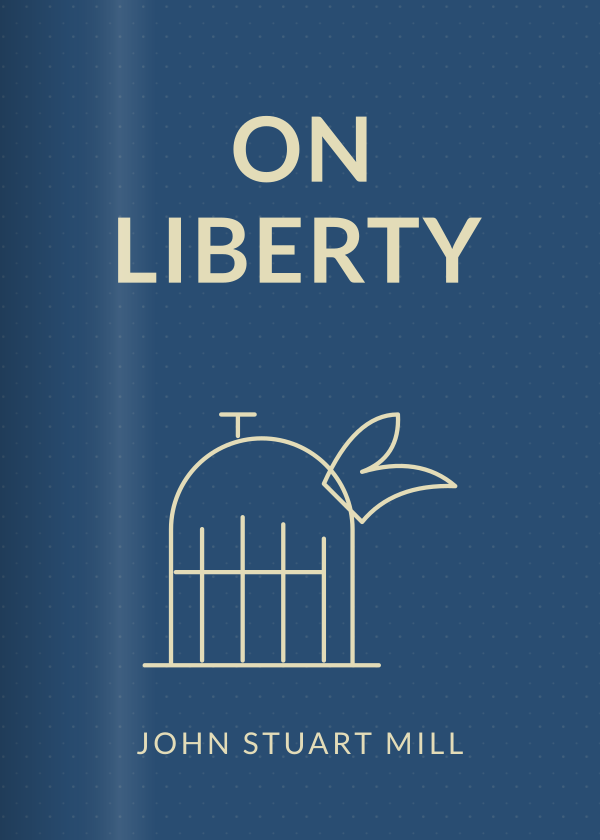
On Liberty coverThe real book. A clearer way through it.

A page from the book

Read it in plain English.

The same passage, with the language made clearer. Read the full book this way in Clarify.

Original

Chapter I

The object of this Essay is to assert one very simple principle, as entitled to govern absolutely the dealings of society with the individual in the way of compulsion and control, whether the means used be physical force in the form of legal penalties, or the moral coercion of public opinion. That principle is, that the sole end for which mankind are warranted, individually or collectively, in interfering with the liberty of action of any of their number, is self-protection. That the only purpose for which power can be rightfully exercised over any member of a civilised community, against his will, is to prevent harm to others.

In Clarify

Clarify’s plain-English version · Generated by AI

The purpose of this Essay is to state one very simple principle. This principle should completely govern how society may compel and control the individual. It applies whether the means are physical force, in the form of legal penalties, or the moral coercion of public opinion. The principle is this: the only reason people are justified, either one by one or all together, in interfering with the freedom of action of any member of their group is self-protection. In other words, power can rightfully be used over any member of a civilized community, even against his will, for only one purpose: to prevent harm to others.

The book behind the language

About the book

Published in 1859, John Stuart Mill's On Liberty asks when society may rightly limit an individual's freedom. Its central principle allows coercion to prevent harm to others, rather than simply because someone disapproves of a person's choices. Mill examines pressure from public opinion as well as restrictions imposed through law.

He defends freedom of discussion, individuality and different ways of living. Even an opinion thought to be wrong, he argues, can help people understand why their own beliefs deserve support. The essay became a major work of liberal political thought and remains part of debates about speech and personal choice. Its examples test where individual independence ends and responsibility to others begins.

Help where it’s hard

How Clarify helps

Stay with On Liberty. Get help with the words and ideas as you read.

Simplify as you read.

Turn on Simplify for clearer prose throughout the book. Or select one sentence and tap Simplify.

Keep the original close.

Tap the eye icon on a simplified paragraph to see the original. It’s always one tap away.

Understand the idea.

Select a sentence and tap Explain for help with what it means. Then carry on reading.

Quick facts

Length
About 130 pages
Difficulty
Challenging
Date
1859
Category
Politics and society

Before you start

A few good questions.

Is there an easier version of On Liberty?

Yes. Clarify keeps the full text of On Liberty and lets you read it in plain English. Tap the eye icon to see the original, always one tap away.

Can I read On Liberty for free?

Yes. Read the full book in Clarify's free library on Android, iPhone and iPad. There is no paid tier and no account to create.

What is Mill's harm principle?

Mill argues that coercing an adult in a civilized community requires the prevention of harm to others. Believing that a choice is unwise or morally wrong is not, by itself, enough. Applying the principle still requires an argument about what counts as harm and who is affected.

Read the whole book

Start with a page.
Keep going with Clarify.

Find On Liberty in Discover’s 145 free classics, or open your own EPUB. Free on Android, iPhone and iPad. No paid tier. No account.